RAISED ON CONTRADICTION.
Ralph Vitolo grew up reading buildings before he learned to read much else, in a part of Italy where a Roman temple and a crumbling apartment block can sit on the same street without either one apologising for the other.
Explore The ProjectsProportion,
first.
Ralph Vitolo grew up between Salerno and Naples, on Italy’s southern coast, where Greek and Roman architecture was never a museum subject. It was the daily backdrop. The Doric columns at Paestum, a short drive south of Salerno, were where these studies properly started, standing in open field with weather and grass instead of a rope line. The discipline of the section drawing, the exactness of a proportion, the way a temple’s geometry could sit inside a Mediterranean landscape without ever fighting its colour, these were the first lessons in looking, long before there was a camera involved.
What held his attention was rarely the ornament. It was the space around it, the void between columns, the geometric contrast between a structure and the sky behind it. Sometimes that emptiness stopped reading as architecture altogether and became something closer to an abstract pattern, a habit of seeing that never really left.
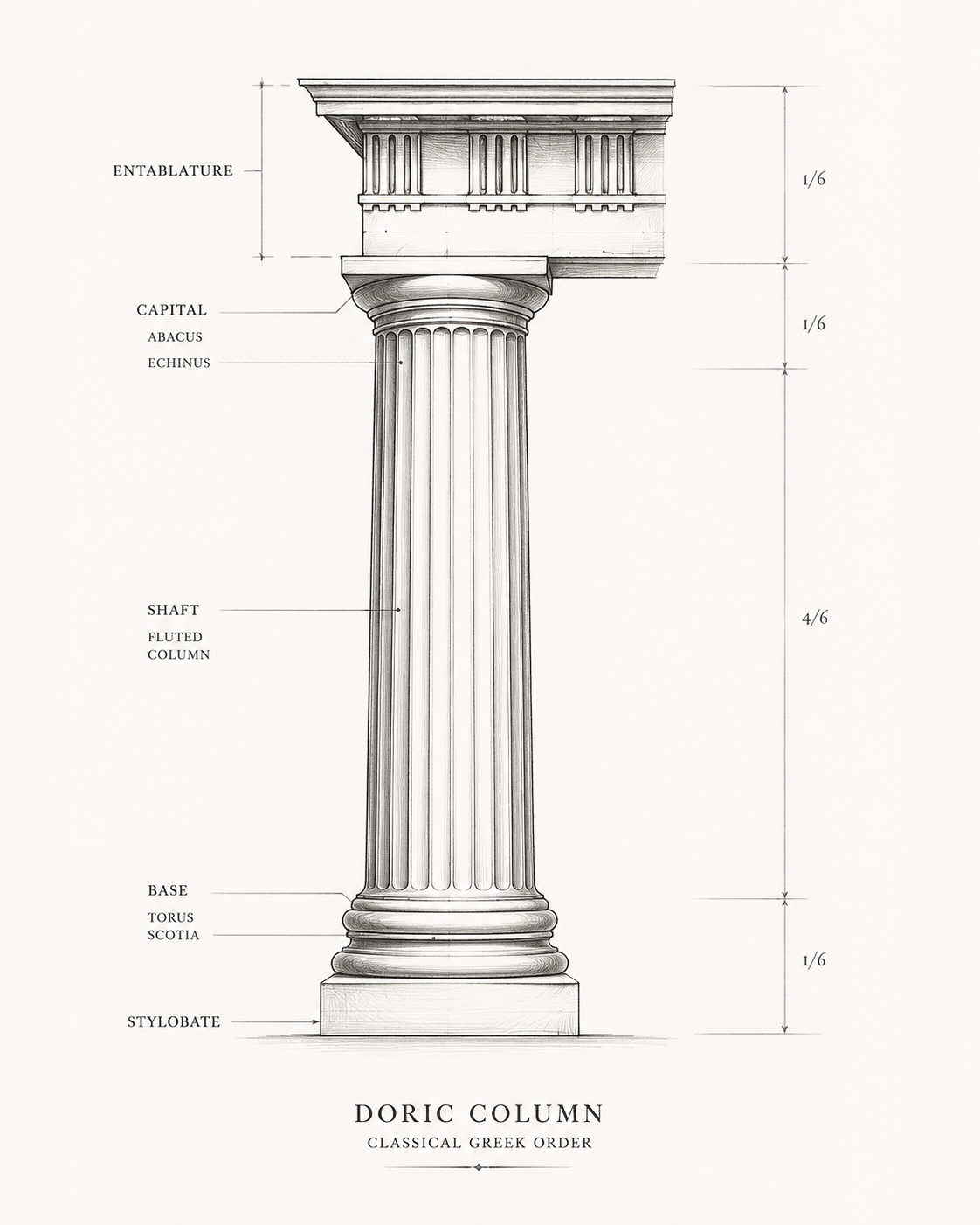
Where the poetry
left.
The clearest version of that same contradiction came later, in the edilizia popolare, Italy’s state built public housing raised through the 1980s and 1990s. Here the ornament disappeared. The colour disappeared. Nature disappeared.
What remained was geometry stripped down to its authority: bare concrete, exposed steel, and enormous skies, grey and low in winter, hard and flat in summer. This became the practice’s real subject, not brutalism as an aesthetic choice, but brutalism as the visible residue of an argument the buildings never stopped having with the people living inside them.
The Vele di Scampia, on the northern edge of Naples, took the argument furthest. Concrete sails stacked into the skyline, built on an idea about density and shared space that the neighbourhood was never given the resources to sustain. Seen years later, what remains isn’t failure so much as evidence, proof that a building can go on carrying a social experiment long after the experiment itself has been abandoned.
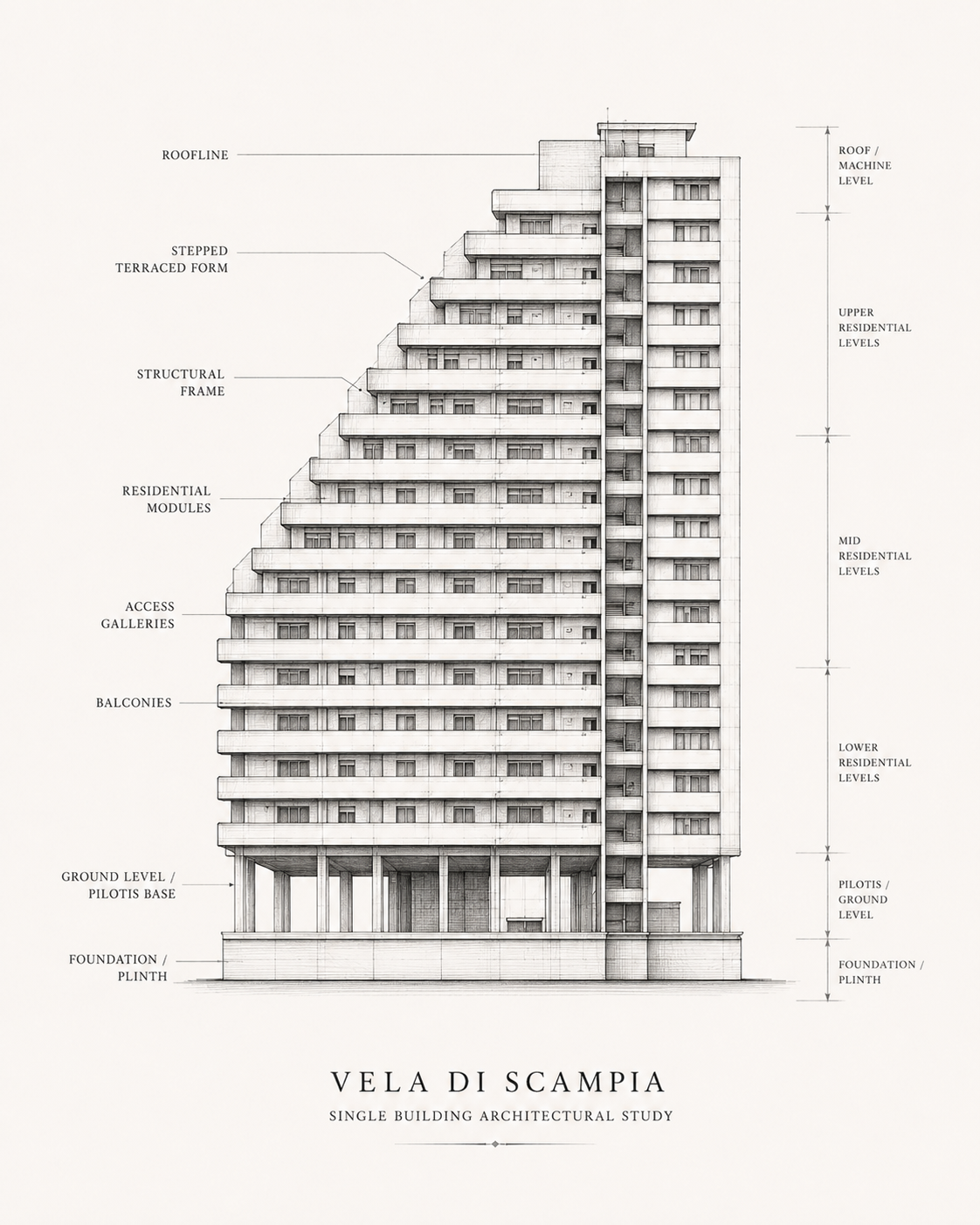
The extreme
version.
Travelling through Europe and North America surfaced the same pattern everywhere, Berlin among the clearest examples, but London is where it settled into home. Here the contradictions are the most extreme version of everything that came before: a Norman church around the corner from a glass tower, wealth a single street from poverty.
On one estate near the Barbican, residents have spent decades covering the raw concrete balconies in geraniums and trailing ivy, refusing the starkness the architects intended. It is a city that keeps arguing with itself in public, in exactly that kind of small, stubborn detail, and that argument is the practice’s ongoing subject.
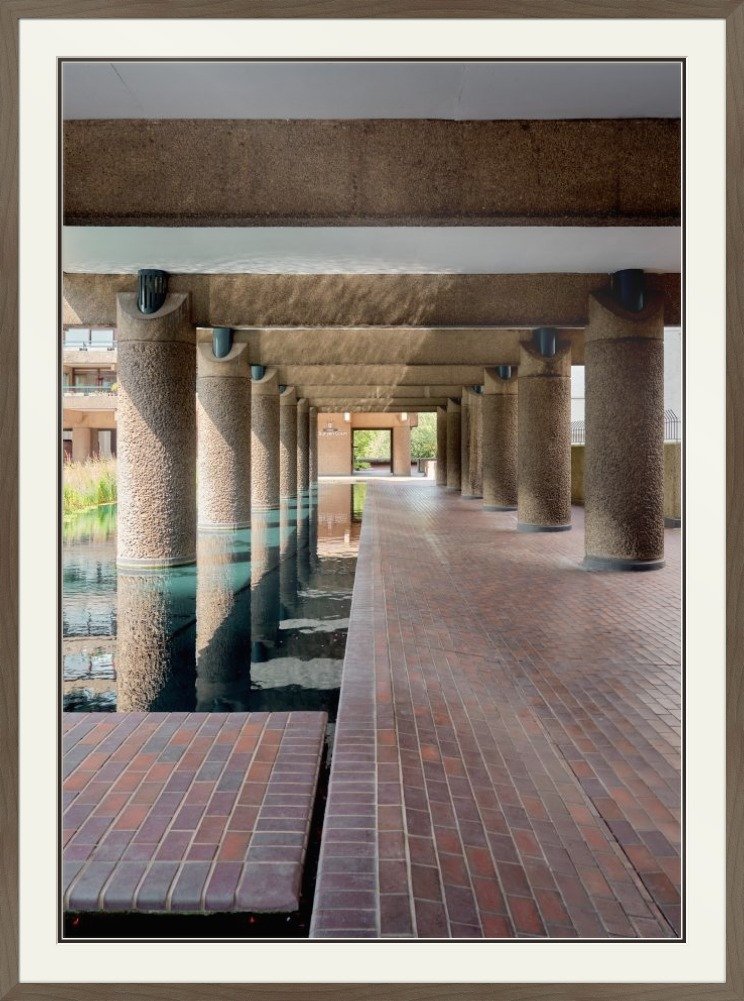
Barbican Centre, London
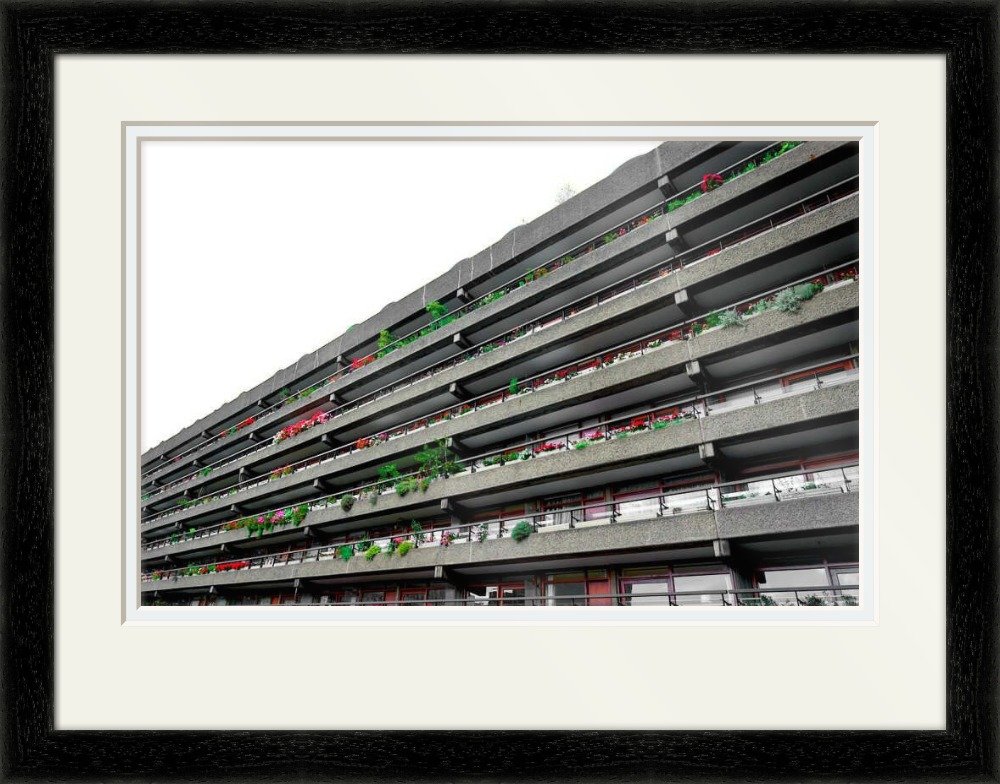
Balconies, Barbican Estate
Discipline first.
Then the risk.
Ralph learned to see the way the architectural photographers he studies see, before he ever picked up a camera of his own. A tripod, a level, the patience to wait for the one hour when the light sits flat enough to trust every vertical. That discipline enforces an honesty a phone can not fake, every frame costs something, so it has to be earned before it is taken, not just captured and sorted out later.
But the discipline stops at the tripod, not at the door. Some of the strongest arguments in this work live on estates and street corners that do not offer good lighting or an easy way out, and he has learned to stand in a stairwell after the sun goes down longer than feels sensible, waiting for one window to light up in exactly the wrong place. That part is still instinct, and the frames that come home from those nights carry a charge the calm ones never do.
The camera can hold a straight line forever. It cannot tell him when to leave.
On working after dark
Geometry is not the subject.
The contradiction underneath it is.
Every photograph in this archive is an attempt to hold that argument still, just long enough to look at it.
See The Practice In Full
Five series, built on the same argument.
From the Kroller Muller sculpture garden to the Grand Canal in Venice, every project follows the same throughline, geometry, contradiction, and the negotiation between what was built and what was already there.
Working photographer based in London. Prints produced to museum standard.
Ships worldwide to 50+ countries. Returns handled personally, wherever you are.